|
 |
|
|
Lessons
Rex teaches guitar and bass lessons from his home studio in St. Louis. He specializes in the studies of acoustic and electric blues, rock, country, bottleneck slide guitar, fingerpicking and flatpicking techniques, jazz skills including theory, development of harmonic and improvisational skills, ear training and performance techniques.
His play-along CD, "Blue Trax" contains 12 variations of the standard 12 bar blues form, providing bass, drum and rhythm guitar backgrounds in different keys and tempos. It comes with a guide to the chord progressions and suggested scale ideas to use for each track. "Blue Trax" is an ideal tool for practicing leads and learning to shape your ideas around the chords and rhythms of a song. It's sure to keep hungry lead players busy for years to come. Here are a few samples:
Now available through PayPal
His new book, "Learning the Language of Music Volume I" helps students to understand the essential elements of music: scales, chords, keys and how to use them. It's filled with helpful fretboard diagrams and excercises designed to give guitar players the ability to express their own musical ideas more effectively.
Here's a sample:
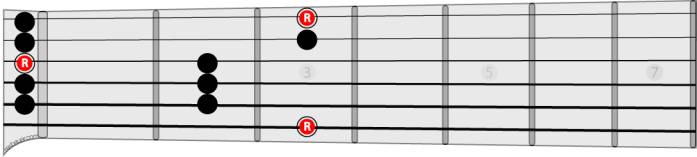
The pentatonic major scale is also used frequently in rock music, but also a lot in many other styles as well, especially country, pop, gospel, R&B, blues and jazz. I can tell you right now that between these scales; the major, pentatonic major, pentatonic minor and blues scale you have the tools to play a few hundred thousand songs. So learn these well and the fun will start soon thereafter. G Pentatonic Major Scale 1st Position:
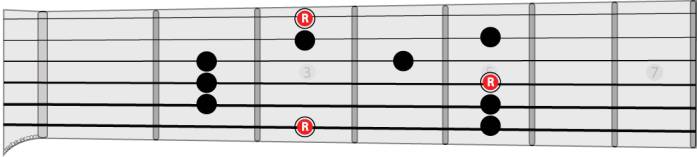
G Pentatonic Major Scale, position 2, two octaves:
Practice : Play these scales (Major, Pentatonic Major, Pentatonic Minor) both going up (ascending) and coming down (descending). Once you're comfortable playing the notes effectively play them to a steady beat, preferably using a metronome and set it to about 60 beats per minute (bpm) Play quarter notes or one note per beat.
IMPORTANT: ALWAYS PLAY THE SCALE FROM ROOT TO ROOT, THEREBY "RESOLVING" THE SCALE. This also helps you train your ear to identify the root of the scale.
ARPEGGIOS The word arpeggio is (like almost all musical terms) an Italian word that means to "play like a harp." In other words to play one note at a time, usually referring to the notes of a chord. So if you were going to play a C major chord, instead of just strumming all the notes in the chord at once, you would play the notes C, E, and G individually (in any order, its still a C major chord). So just think of it as playing a chord one note at a time and you've got it. Arpeggios make it a lot easier to understand chords, since they allow you to become intimately familiar with each note of the chord rather than to just hit a chord all at once without really knowing what you're doing. You will see plenty of arpeggios in this booklet and I hope you'll embrace them for the useful tools that they are. Once you get hip to the value of arpeggios you'll never need to look at one of those convoluted and, in my opinion, very confusing chord encyclopedias ever again. YOU will become the chord encyclopedia!
C Major Arpeggio, Two Octaves
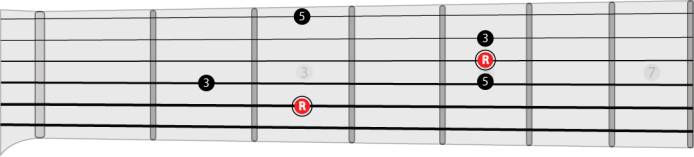
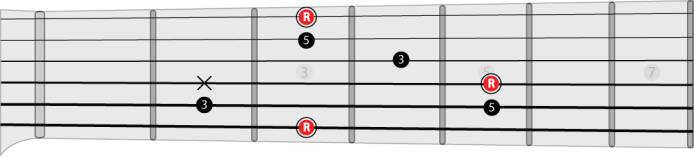
G Major Arpeggio, Two Octaves:
Copyright 2008 Xerex Music Publishing all rights reserved
For more information contact Rex at: 314-956-0359
|
|
|
|
|
 |
 |
 |
 |
 |
|